

 by
by 
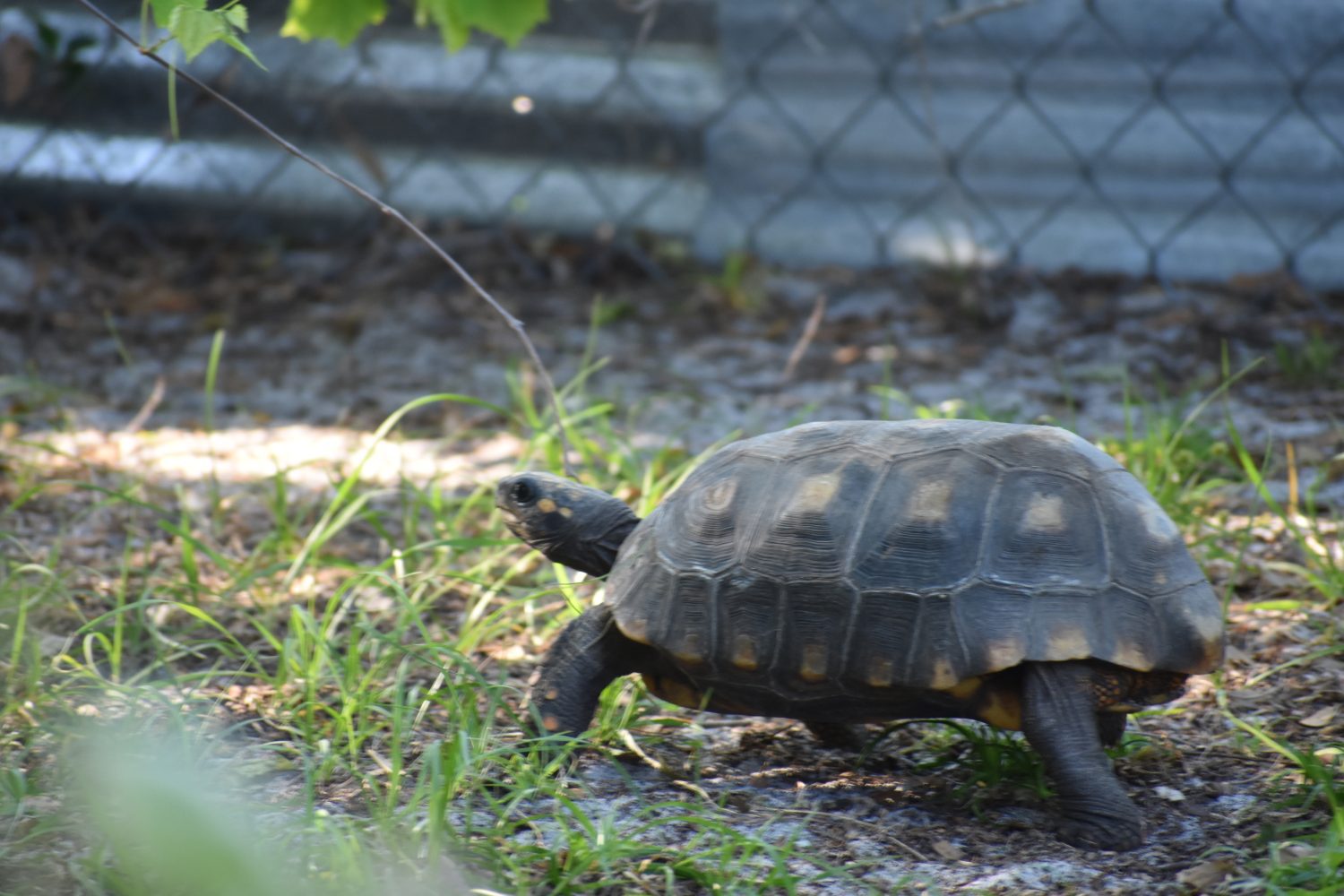
The red-footed tortoise (Chelonoidis [Geochelone] carbonaria) is found throughout much of northern South America. It inhabits savannas and dry forests and, to some degree, humid forests.
Sizes vary widely depending on geographic location. Although many adults average around 14 inches, one reaching nearly 20 inches has been recorded. There are also dwarf geographic variants, some of which sport red or orange heads. Like with Cherryhead Tortoises.
Red-footed tortoises show a diversity of size and color depending on their geographic location. Unrelated specimens are preferable but not mandatory.
Adult red-footed tortoises show sexual dimorphism. In general, males are slightly larger than women, have a significantly concave plastron, and have a noticeably larger tail.
Although a single pair of red-footed tortoises can achieve reproduction, chances of success greatly increase with a breeding group.
Maintaining at least two red-foot males is believed to help in successful reproduction. They can engage in competition. Thus, a least two pairs are recommended.
Occasionally, a male gets in a female’s face and head-bobs. Red-foot males often have a fast side-to-side jerk, but yellow-foot males have more of a long sideways sweep.
Males follow women around until they can position them correctly for mating. The bottom of the male’s shell is concave. This concave shape ensures a snug fit over the top of the female’s shell.
Red-foot males make an unusual noise during mating. It is a loud clucking sound, almost like that of a chicken. Yellow-foot males also vocalize, but it is a much mellower version of the red-footed cluck.
Red-footed tortoises dig huge nesting holes. They create a foothold on either side. They’ll place one foot on one side. They scoop out the dirt with the other foot. Then they’ll switch feet, scooping with the other one.
The nest is often large enough for a significant part of the rear of a female’s shell to drop into. She will dig beneath herself as far as her rear feet will reach. When she begins to lay her eggs, she can push the eggs ahead. This allows room for others.
Once the hole is finished, the female redfoot will start dropping the eggs, repositioning them as they are laid. During the egg-laying, she will be in a “trance,” staring straight ahead.
According to Reptile Magazine, red-footed tortoises and yellow-footed tortoises can produce eggs at any time during the year. Hence, a nesting area or chamber should always be available.
A female becomes restless as she wanders around the enclosure. She is looking for a nesting site. This behavior is the most obvious sign that eggs are on the way.
Most women seem to nest in the evening and prefer areas with moist substrate. Sometimes they dig a hole and walk away from the nest without depositing eggs. Fill this test hole back in. The female will nest in that area in the next day or so.
Red-footed and yellow-footed tortoise nests are shallower than other species’ nests. Occasionally, eggs are barely covered. Women can produce several clutches a year. Clutch sizes vary from one to 13 eggs, but three to eight is average.
Before digging up the eggs, set your incubator to keep a temperature between 84 and 88 degrees Fahrenheit.
Buy a digital lowest-peak thermometer with a probe. You should place it in the incubator next to the eggs. This way, you can check the temperature. The temperature of incubation determines the sex of the animal. Temperatures in the middle produce a mix of the sexes.
Male = Low Temp
Females = High Temp
When your incubator is set, prepare the tortoise egg container. Fill it halfway with moist vermiculite. Use equal weights of vermiculite and water to obtain the best moisture content.
Carefully dig up the eggs, and be sure not to rotate or flip them because this can suffocate the embryo. Use a soft lead pencil to mark the date on the egg. Draw an “X” on the top to help you remember the correct orientation. Bury tortoise eggs slightly in the vermiculite.
A lid on the tortoise egg container is not necessary. Make sure you can keep the humidity in the incubator between 70 and 80 percent.
You can achieve this by occasionally misting the vermiculite. Also, keep a deli cup of water and/or a moist sponge in the incubator.
Open the incubator daily to give the eggs fresh air. Incubation times vary for both red-footed tortoises and yellow-footed tortoises. Typically, it takes 120 to 190 days. On average, it is 145 days.
Like what you read? Appreciate the information. We are a non-profit 501c3! Thank us with a contribution by clicking DONATE!


 by by
by by
Leave a Reply