

 by
by 
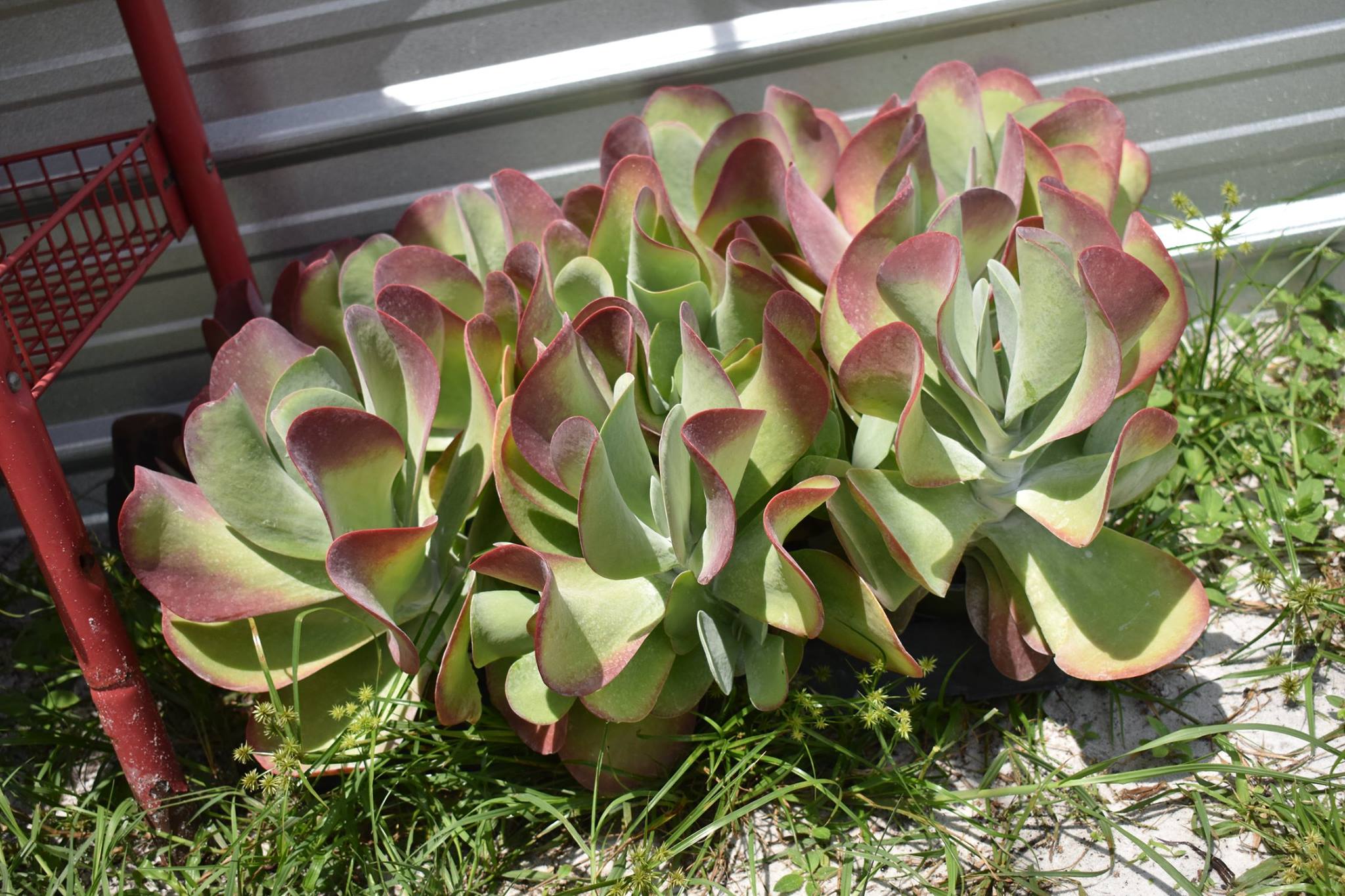
Kalanchoe thyrsiflora ‘Flapjacks’ are lovely succulents with flat leaves that can ruffle and are even edged in a reddish color. Kalanchoe thyrsiflora ‘Flapjacks’ is a member of the Crassulaceae family and is native to South Africa.
It’s commonly referred to as the paddle plant because of the shape of its leaves. This plant is also known as desert cabbage and dog tongue.
Flapjack Kalanchoe is appropriately nicknamed for the fleshy leaves that stack one on top of the other like pancakes.
This interesting plant reaches heights of up to 2 feet at maturity. At maturity, the plant develops a spiky, dark yellow bloom.
Flapjack Kalanchoe is often grown as an indoor plant, but it can grow outdoors in U.S. Department of Agriculture plant hardiness zones 9 through 11.
- Plant Flapjack Kalanchoe flapjack in a location where it receives several hours of bright sunlight. Ensure it is protected during the hottest part of the day. Avoid total shade, which causes the plant to become long and spindly. Sunlight brings out the intense red leaf edges.
- Water Flapjack Kalanchoe deeply whenever the top of the soil feels dry. Let the soil dry before watering again. Kalanchoe rots quickly in the muddy soil. Check the leaves often during the winter months, and water only when the leaves start to shrivel.
- Spread a thin layer of sand or gravel on the soil around the plant. This helps to moderate soil moisture. It also aids drainage and temperature control. Arrange the material so it doesn’t contact the stem. Sand or gravel becomes hot enough to damage the plant.
Fertilize flapjack two to four times per year, with the first application in the spring when new growth starts. Apply the last fertilizer in the fall, then stop through the winter. Use a slow-release, balanced fertilizer, like a 10-10-10 product, to supply continuous nutrients between feedings.
Dig up the Flapjack Kalanchoe when the original parent plant dies at the end of the blooming season. Remove the dead plant. Replant the offsets that grow at the base of the parent plant to keep the plant vibrant and healthy long-term.
Like other succulents with overlapping leaves along a single stem, when Kalanchoe blooms, the entire plant elongates. If you want many new little plants, let the mother plant bloom.
Providing it survives the effort (they usually do, but not always), you’ve hit the jackpot.
You can harvest each cluster with several inches of stem attached. This anchors it and allows it to start as a cutting. Roots will grow from leaf axils (where leaves are attached to the stem).
This neat succulent doesn’t need any pruning or trimming during or after the growing season. The only exception is the flower stalk. After the flapjack flowers, cut out the dead flower stalk where it attaches to the main plant.
Flapjack is grown as a foliage plant. Flowers only after three to four years. In general, you can get by without any pruning. Flapjack doesn’t attract pests and rarely suffers from diseases and other problems.
<br /> amzn_assoc_ad_type = “smart”;<br /> amzn_assoc_ad_mode = “search”;<br /> amzn_assoc_tracking_id = “crazycritte02-20”;<br /> amzn_assoc_title = “Shop Related Products”;<br /> amzn_assoc_default_category = “All”;<br /> amzn_assoc_search_bar = “true”;<br /> amzn_assoc_search_bar_position = “bottom”;<br /> amzn_assoc_default_search_phrase = “kalanchoe succulent”;<br /> amzn_assoc_marketplace = “amazon”;<br /> amzn_assoc_placement = “adunit0”;<br /> amzn_assoc_region = “US”;<br /> Like what you read? Appreciate the information. We are a non-profit 501c3! Thank us with a contribution by clicking DONATE!


 by by
by by
Leave a Reply