

 by
by 
The cherryhead tortoise is not considered a distinct species or subspecies, but rather a regional variant or morph of the Red-footed tortoise (Chelonoidis carbonarius), specifically originating from Brazil. Consequently, its scientific classification has followed the same history as the Red-footed tortoise, moving from a broad, older genus into a specialized South American genus.

Historically, the Red-footed tortoise was classified under the genus Testudo, with early scientific names including Testudo carbonaria (Spix, 1824) and Testudo boiei (Wagler, 1833).
For much of the 1900s, it was classified within the genus Geochelone—a “catch-all” genus for many tortoise species—becoming Geochelone carbonaria.

The species was reclassified into the genus Chelonoidis. This change reflects phylogenetic evidence that separates South American tortoises into an independent clade.
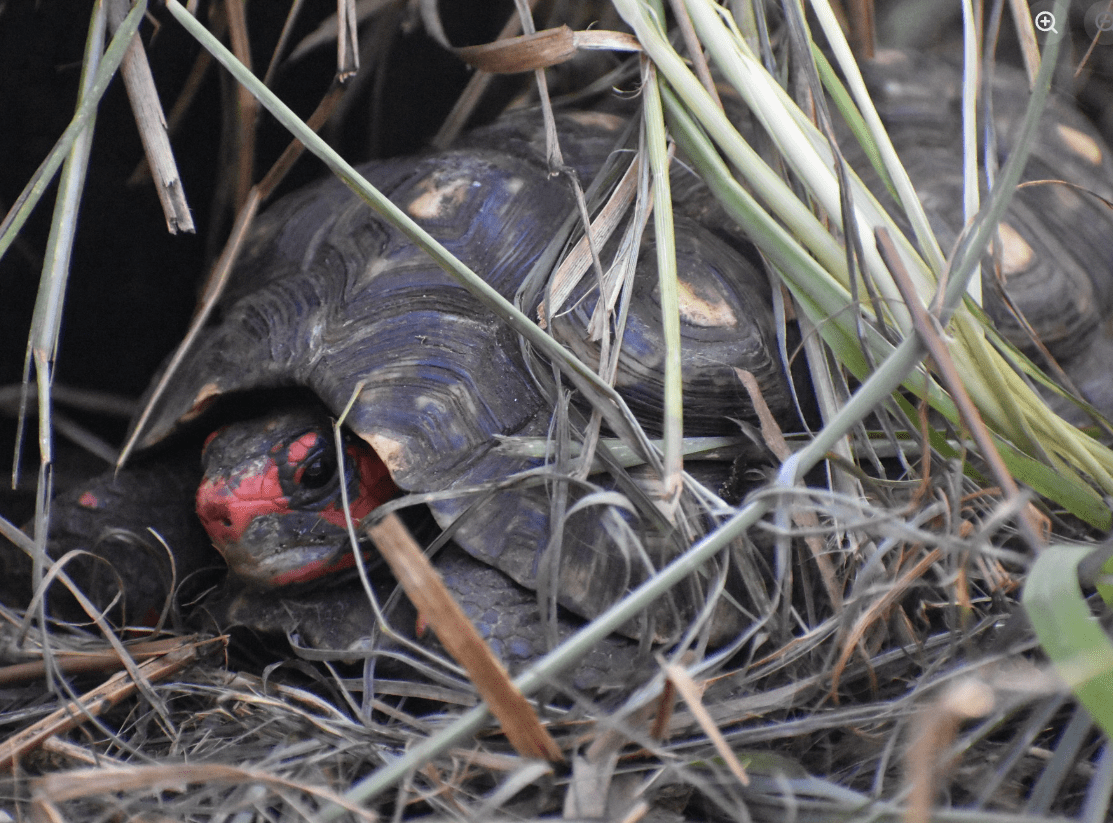
Cherryheads were recognized as a distinct, vibrant variant in the early 1980s. A 1984 shipment of tortoises from Brazil to the Blue Ribbon Pet Farm in Miami showed such distinctive red coloration that they were coined “Cherry-head Red-foots.’

They are considered a “locality” (Brazilian) that breeds true to their bright red or orange head/leg coloration, but they are genetically part of the broader Red-footed tortoise population.
Cherryhead tortoises are sometimes wrongly identified as Geochelone carbonaria or a separate species. Cherry-head tortoises were formally identified and recognized as a distinct variant in the early 2000s. They share the same current classification as all other Red-footed tortoises (Chelonoidis carbonarius).
The Cherry Head features a distinct, dark brown to black, high-domed carapace (top shell) with a relatively small, elongated, and often “loaf-shaped” profile, typically reaching 10–14 inches in length. Key features include vibrant orange-yellow, often marbled, spots on the scutes (shell segments) and a light-colored, strongly marbled plastron (underside).

These red-footed tortoises belong to a genus with fossil and subfossil records indicating a presence dating back to the Late Pleistocene and Holocene. While specific, detailed fossil records of C. carbonarius are scarce, they belong to the Chelonoidis genus which includes extinct giant tortoise species found in the Caribbean.
The broader fossil record for this group includes extinct species like C. marcanoi, C. dominicensis, and C. sombrerensis, indicating a, historically, higher diversity of these tortoises in the past.
Some finds from the region date back to around 30,000 to 70,000 years ago. Subfossil records suggest that C. carbonarius was, likely, transported to different Caribbean islands by pre-Columbian inhabitants for food


 by by
by by
Leave a Reply