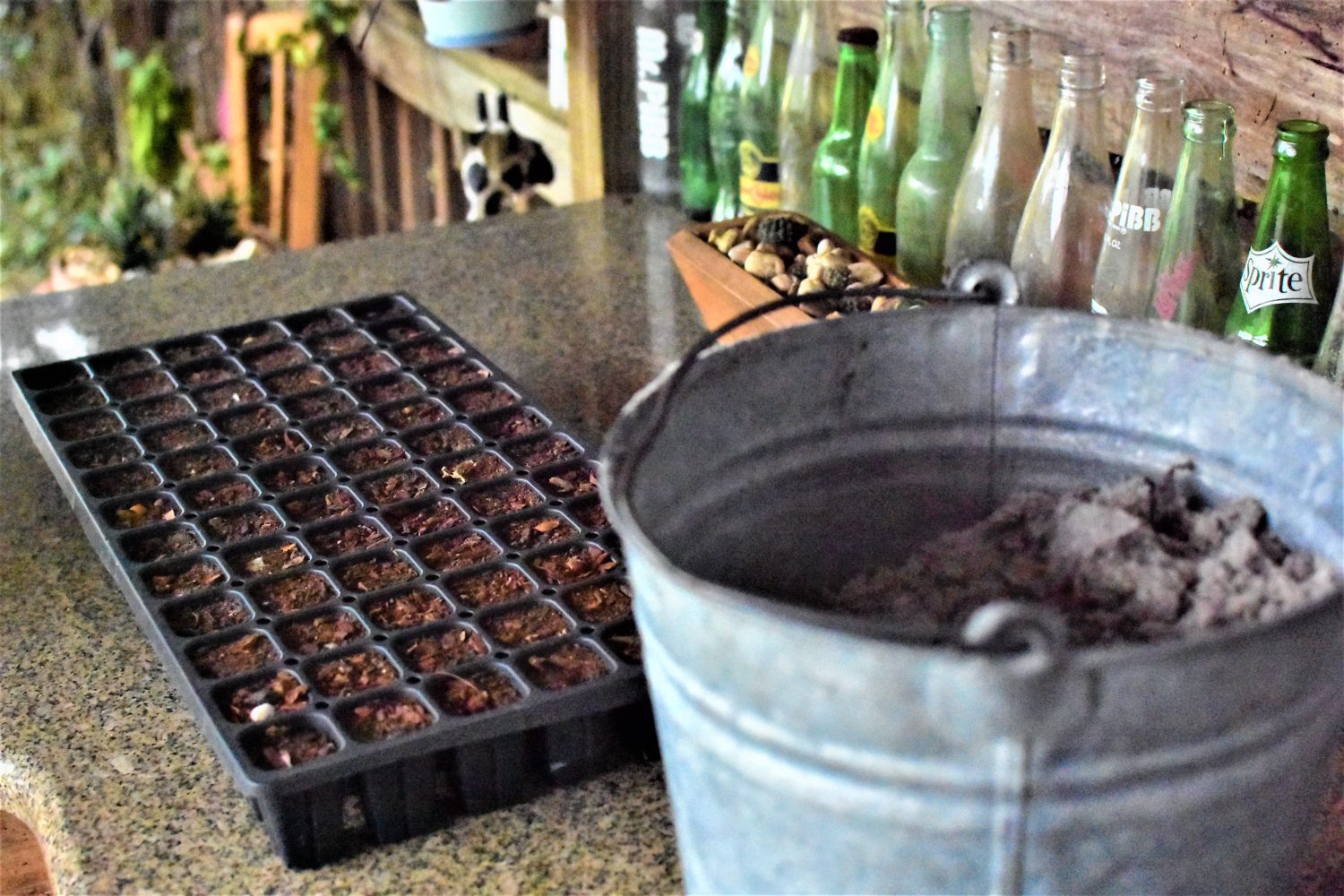
One fascinating aspect of succulents is their ease of propagation. They can be bred easily into new plants. This can be achieved by a variety of means, such as leaf cuttings, offsets, stem cuttings, or seeds.
There are more than 2,000 species of cacti and succulents. Cactus and succulent seeds are generally available from commercial seed companies.
The genus and species of your succulent(s) will determine the most effective means of propagation.
For example, some species can be propagated with a leaf or a cutting. These include sedums and some echeverias. Nonetheless, aeoniums need cuttings. Growing from seeds is both challenging and rewarding.
We begin to propagate a Sencio in our video called A Crazy Day. Click below to watch….
Thank you, tee8614 for dropping the name in the comments. Now we know what the plant in the video is! Watch Part 3 for more information!
Propagating with seeds is by far the slowest method, but it can be very rewarding! Mature succulents produce seeds at the swollen base of their flowers. These seeds can be collected when the plant is finished flowering.
It’s best to start the seed propagating process at the beginning of spring. This allows the plants to have a longer growing period. They can develop more before entering the winter dormancy stage.
Step One: Line a tray or planter with succulent/cactus soil, or your homemade well-filtering mix! Soak your seeds for 30 minutes to loosen the outer seed coat. Then spread the seeds on the soil. Allow space between them to encourage and help growth.


Afterwards, cover your seeds with a very thin layer of sand or succulent soil. Make sure not to bury the seeds.
Step Two: Place the tray or planter in a warm environment. Cover the tray with clear plastic to create a greenhouse effect. This keeps the seeds moist and warm.
Step Three: Water the seeds with a spray bottle daily, only letting the top soil dry out between watering. The seeds will start to germinate in 2-3 weeks.

As the succulents grow, you can gradually revert to a more traditional succulent watering cycle.
Click to find more info…
- About Us
- Animal Behavior
- Animal Health
- Animal Information
- Cleaning Habitat
- General Animal Information
- Miscellaneous
- Plant and Garden
- Product For Sale
- Reptile Safety
- Survival
- Uncategorized
Clean your propagation pans by washing them with disinfectant. Pans should be small and shallow, no more than 4 inches deep and 6 inches in diameter. There are many different suggested growing media formulas to experiment with.
One formula calls for mixing a coarsely sifted organic growing medium. This is commercial potting soil. Mix it with an equal volume of sharp sand, perlite, or pumice for drainage.
You can pasteurize your growing medium by baking it in an oven at 300 degrees Fahrenheit for 30 minutes. Allow it to cool and wet it thoroughly. Let it drain but not dry out. Fill the propagation pans with the moist soil mixture to about ½ inch below the rim.
Sow seeds in the pans around the end of April. Plant seeds as deep into the soil as the seeds are wide and press down lightly. Cover small seeds with a sprinkling of sand to hold them in place.
Seed spacing will depend on the species of cactus or succulent you are germinating. Cover the pans with clear plastic or glass.
Place them in a bright location but out of direct sunlight. Keep the temperature around 70 degrees Fahrenheit. If the soil seems too dry, spray lightly with water. Be sparing. Too much water can drown the seed. Don’t let the soil dry out.
Watch for germination. Most cacti and succulents will germinate within three weeks, but some species require more time, even up to a year.
When seedling plants appear, raise the cover during the day for ventilation. Watch soil moisture. Don’t all the ow soil to dry out but also don’t saturate it. Keep the temperature between 50 and 70 degrees Fahrenheit.
Transplant your plants into their permanent pots. Most cacti and succulents will be ready to transplant in 6 months to a year after germination.
The right growth size for transplanting will depend on the species you are growing. Most cacti can be transplanted when they are the size of a large marble.
Many other succulents can be transplanted when they are 2 to 4 inches tall. Gently lift the plants from the growing medium. Set them into the soil of the new container. Firm the soil around the roots. Water well.
Check out our web page, Propagating Succulents, for more information on other propagation techniques.
Like what you read? Appreciate the information. We are a non-profit 501c3! Thank us with a contribution by clicking DONATE!
Leave a Reply