
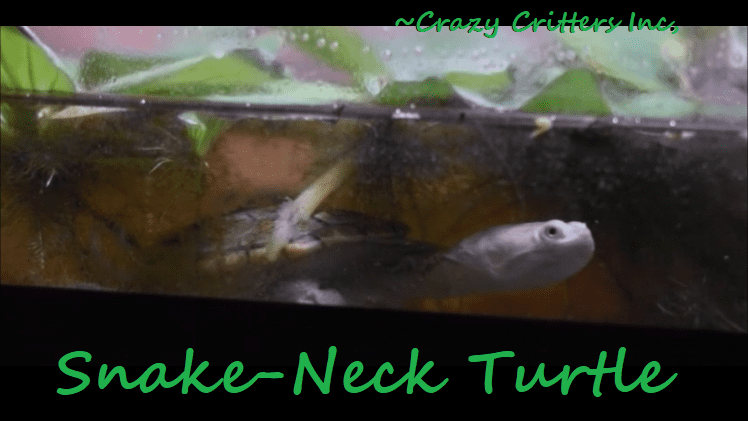
Snake-necked turtles are a group of side-necked turtles. Their necks range from nearly as long as the shell to slightly longer.
There are about 16 species of Snake-necked turtle. The reptile belongs to the genera Chelodina and Macrochelodina in the family Chelidae. It is characterized by long necks that can bend and move in a serpentine fashion.
In addition, these reptiles possess the longest necks of any group of turtles in the world. Since the neck is so long that it cannot be retracted completely beneath the margin of the shell.
You can only find side-necked turtles south of the equator. The snake-neck turtle uses its flexible, slender neck to lift its head out of the water. It takes in a breath of air without exposing the entire body.
These turtles inhabit the waterways of Australia and southern New Guinea. Because all snake-necked turtles appear to be strongly aquatic animals, they prefer to walk along the bottom of streams and other water bodies rather than swim
As carnivores, the turtles prey on fish. When hiding from predators or stalking prey, the neck is folded against the body. Once the prey is close, the neck and head lunge forward, the turtle opens its mouth and throat to create a vacuum. Along with water, prey is sucked into the mouth, which quickly snaps shut. The mouth will open slightly to allow water, but not the prey, to escape.
The Snake Neck Turtle can get rather large, reaching lengths of up to sixteen inches. This reptile is known for having insatiable appetites.
Their menu includes pinkies, minows, commercial reptile food (we suggest Mazuri products), bloodworms, prawns, snails, crickets, and even leafy greens. The key to keeping them healthy in captivity is a varied diet.
All snake-necked turtles are egg layers. One species, the northern snake-necked turtle, will lay eggs in nest chambers beneath the water.
Immediately after the eggs are deposited, the embryos enter diapause. This is a period of dormancy. They resume development only when the nesting chamber dries during the dry season.
The clutch of eggs hatches 9 to 10 months after egg deposition and just as the rainy season begins.
Rather shy animals by nature, captive-bred Snake Neck Turtles lose this trait over time and with handling. These turtles are friendly and can be housed with others. Several subspecies of the Snake Neck Turtle are threatened or endangered.
Like what you read? Appreciate the information. We are a non-profit 501c3! Thank us with a contribution by clicking DONATE!
Leave a Reply