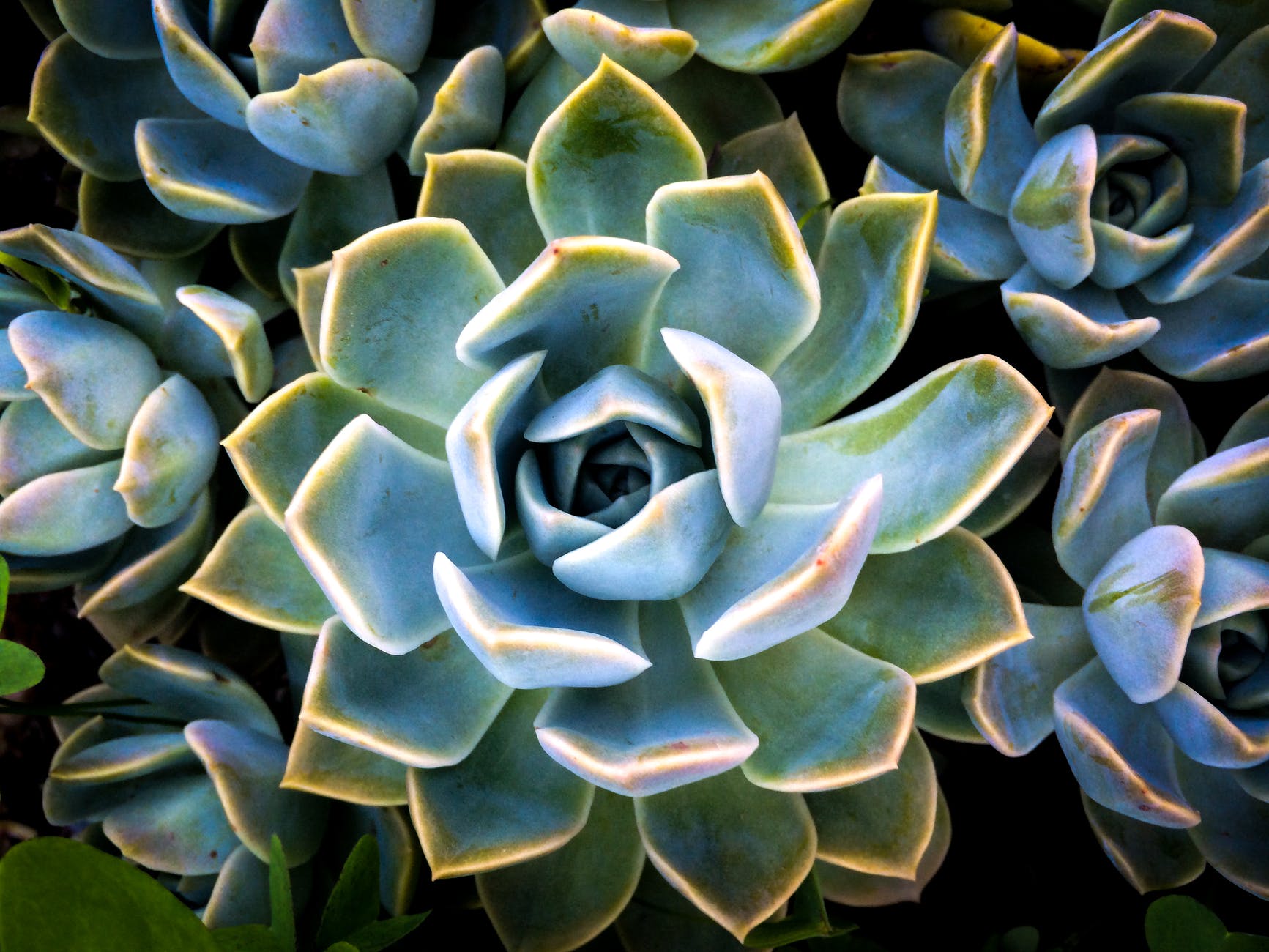
Do you wonder if Echeveria care is as easy as it looks?
Most Echeveria form rosettes of fleshy leaves with colorful tips. Echeveria and other non-hardy succulents add a bright, cheery appearance to the floral bouquet, dish garden, or vivarium.
Because of the easy care these plants need, it makes this a perfect gift to give for any holiday.
Echeveria is a large genus of succulent plants in the Crassulaceae family.
Echeveria is native to Mexico and Central America.
They are a desert-dwelling plant that has evolved techniques to adapt to the harshest environments.
But they aren’t used to the cold and will die in freezing weather.
Just because you live where winter is a real winter doesn’t mean that you can’t enjoy these colorful plants.
You can keep them healthy during the cold months by moving them indoors.
Then, once the threat of frost has passed, gradually move them back outside in the spring.
Other people want to enjoy these colorful plants. However, they do not want houseplants, and they treat Echeveria like annuals and just plant new ones each spring.
Like they’re used to in their native growing grounds, Echeveria like full sun. Try to avoid these two things: drastic sunlight changes and summer afternoon full sun.
Dramatic changes in lighting can stress plants out. If you are moving your plants outside in the spring, do it gradually.
Put them out for only a couple of hours in the morning sun. Slowly giving more time outdoors during the day, until they are in full sun.
Intense afternoon sun can, in some regions, be too strong, and the leaves will sunburn.
Burned leaves will not heal. Since Echeveria keeps its leaves for a long time, it will look burned for a long period.
If the damage is severe, you should cut the head off the plant. Then let it re-grow from the stalk.
During the winter, when your plants are inside, put them near the brightest window in your house.
Your plants will stretch if they don’t have enough sunlight. Ideally, you would put your plants near a south-facing window. If that isn’t a choice, put them near a window that gets the most light.
Furthermore, in their natural habitat, many Echeveria grow on rocky outcroppings at higher altitudes. For this reason, they for the tightly compacted rosette, which clumps readily.
Truly, it is one of the easiest plants to grow.
Additionally, many Echeveria with proper sunlight will develop red outlines to the leaves. And vibrant flowers will bloom with the proper placement and care.
FACT: The genus is named after the Mexican botanical artist Atanasio Echeverría y Godoy.
Echeveria, indoors or outside, doesn’t like to be kept too wet. They also don’t like to be kept too dry. We typically find that succulents like more water than most people think.
The exception is the cold months. Click to read Are Succulents Okay Outside In The Cold?
In a house, the dry home temperatures dry things out even faster. You don’t want your soil to be bone dry, or it will wither the plant’s roots.
When you water Echeveria, water the soil and not the rosette. Pour in the water until it drains out the bottom.
Repeat this a couple of times. Then don’t water again until the soil has dried out. You don’t want your plant to remain soaking wet all the time. To help prevent this, don’t let the pot sit in a saucer full of water.
The time between watering depends on the temperatures and conditions of the plant.
The most common problems seen on Echeveria are due to poor watering habits. Over and underwatering can both produce similar symptoms. Wilting, shriveling, dropping leaves. You know your watering habits best. Keep an eye on your plants and make adjustments if needed.
Like all succulents, Echeveria needs soil that drains quickly. This helps prevent moisture from rotting the roots.
Many growers will create their special mixture of soil and perlite. Any good-quality potting soil or a cactus mix will work fine. As a rule of thumb, squeeze a handful of moist soil together. It should crumble apart again when released.
If you keep your plants alive for several years, you will want to re-pot them. Getting a fresh change of soil every couple of years will keep them healthy and growing well.
Fertilizer is not a continual need for Echeveria. Succulents grow naturally in soil without a lot of nutrients. So, they are especially susceptible to fertilizer burn.
These plants can gain from the occasional extra boost. Use a slow-release fertilizer at the beginning of spring. Alternatively, use a liquid fertilizer that is diluted 2-4 times more than normal and applied less often than recommended.
Use a low-nitrogen mix or a cactus fertilizer. Remember that it is a lot easier to over-fertilize succulents than to under-fertilize.
When you pot up your Echeveria, you have a wide range of containers to choose from.
Generally, the smallest size possible, or something that is just bigger than the root ball, is the right choice.
People sometimes worry about overpotting.
This is when you use a large container for a small plant. The potential problem is that greater soil volume can hold more moisture and lead to the risk of rot.
Most importantly, the soil you use with succulents should have excellent drainage anyway, and larger pots shouldn’t pose any problem.
So, find the container that you think looks great, small or large, and let your Echeveria grow.
Do you appreciate the information we shared and want to thank us? You can become a sponsor by donating. We are a 501c3 Nonprofit! Click to donate.<br /> amzn_assoc_ad_type = “smart”;<br /> amzn_assoc_ad_mode = “search”;<br /> amzn_assoc_tracking_id = “crazycritte02-20”;<br /> amzn_assoc_title = “Shop Related Products”;<br /> amzn_assoc_default_category = “All”;<br /> amzn_assoc_search_bar = “true”;<br /> amzn_assoc_search_bar_position = “bottom”;<br /> amzn_assoc_default_search_phrase = “echeveria”;<br /> amzn_assoc_marketplace = “amazon”;<br /> amzn_assoc_placement = “adunit0”;<br /> amzn_assoc_region = “US”;<br />
//ws-na.amazon-adsystem.com/widgets/onejs?acw=true&MarketPlace=US
Leave a Reply