In-ground succulents can be mixed with container-grown species for added emphasis. This is especially true for species that need to be moved seasonally during adverse weather.
You have noticed that succulents growing outdoors often seem to be healthier and prettier than those grown indoors.
There are two major reasons for this. More sunlight prevents stretching. Better airflow allows the roots to dry out more quickly.
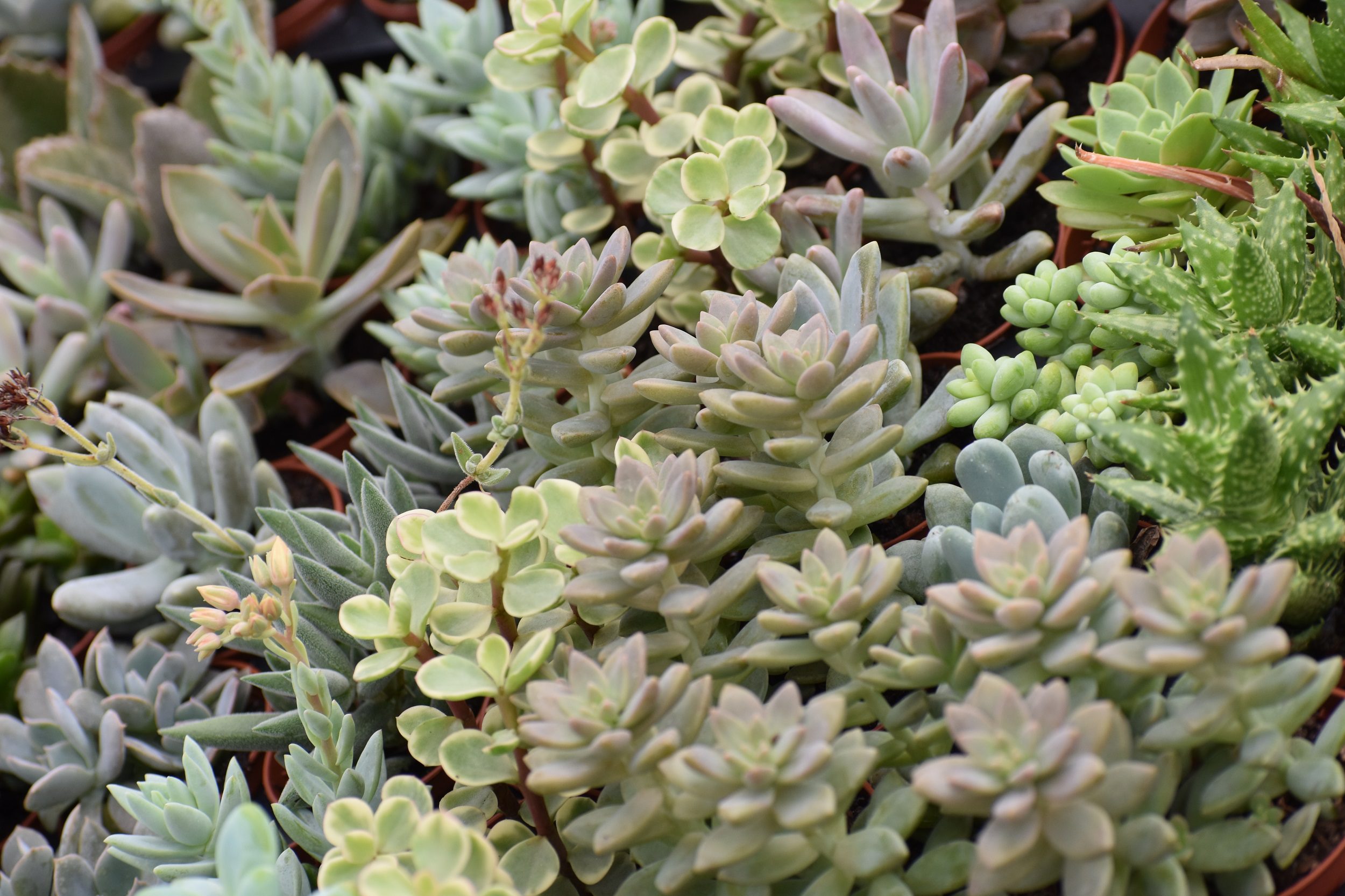
Gardeners worldwide use them as stunning single-use focal point plants. They serve as durable ground covers for difficult slopes. These plants are also used as patio accents or grouped in colorful combinations.
What Garden Succulents Need
There are three major considerations for growing succulents outdoors:
Temperatures.
The timing of natural rainfall,
Duration and intensity of sunlight.
The best advice on succulent gardening is to choose the right plants for your area. Prepare the soil for better drainage. Protect some plants from the hot mid-summer sun. And have fun!
Hint: Cold Temp = 0 Water
High temperatures and low precipitation have forced these plants to store water in their leaves, stems, and roots. This adaptive mechanism has resulted in an incredible variety of different leaf forms and plant shapes.
Not all succulents are from the desert. There are some extremely cold-tolerant alpine succulents, including London Pride saxifrage, that will simply melt in warm climates.
Many popular garden succulents will tolerate mild freezes. These include certain Aloes and Senecios, golden barrel cactus (Echinocereus), cholla (Cylindropuntia), and pincushion cactus (Mammillaria). Echeveria, and Graptopetalum.
There is much more sunlight outdoors. It’s very easy to burn your succulents with too much sunlight or too much heat.
Succulents that are larger and have a more established root system will tolerate light and heat more easily.
At least half a dozen types can easily survive being left outdoors in USDA Zone 4 or 5. These types mainly include certain species of Yucca, Agave, Sempervivum, Delosperma, Opuntia, and Sedum. These zones can get to -30 30°F. Keeping container plants close to buildings will help protect them from cold injury.
Since there is much more sunlight outdoors, it’s very easy to burn your succulents. They can be damaged by too much sunlight or too much heat. Succulents that are larger and have a more established root system will tolerate more light and heat more easily.
On the other hand, newly planted succulents will need to be kept in the shade longer.
Once the weather is around 50 degrees, you should reduce your watering frequency. Water less than once per month.
This is only during the cold months. These plants are not growing because they are hibernating.
Watering them only causes them to melt and rot. People often feel like they should water the plants because they see no new growth. Still, you will not see new growth. EVEN when your plant blooms.
This is a natural part of its life. If you water more than once per month, you are asking for an ugly outcome. Using the spritz and spray method will also lead to problems.
Garden succulents can tolerate dry conditions for a long time. Nonetheless, they usually grow and flower better with regular watering during the active growing season.
Though quite a few, including Opuntia, Yucca, Aloe, Echinocereus, Cylindropuntia), Mammillaria, Agave, and Delosperma can survive in most arid or summer-dry parts of the country on rainfall alone, most will need watering at least every few weeks, often more in very hot areas.
Too much water is worse than too little. Thus, most gardeners keep outdoor succulents on the dry side during rainy weather.
Especially in winter, you should take steps to help reduce rot. You should also help them survive lower temperatures. This means covering them from the rain. Alternatively, keep them in pots to move under a protective porch roof.
Less Sun and Less Light = Less Water
People often do not realize that plants have different water needs based on their location. This is true even if they are the same species.
In general, most succulents do best in the sun. Many will get leggy and weak without at least six hours of sun daily. Many get more colorful and flower better in eight or more hours of direct sun.
Plants with colorful foliage take more intense sun than green or variegated varieties.
However, some will fade, spot, or even burn in the intense heat of the full sun. This occurs especially in humid climates. It is more when temperatures remain above 90°F or so.
Many succulents need to be shaded from mid-day sun and afternoon sun by buildings or lattice. They can also be protected by arbors, shade cloth, or trees with light, fine-textured foliage.
How to Plant Succulents Outdoors
You should plant as early in the season as possible to allow succulents to become established before winter.
Be prepared to protect cold-hardy kinds the first winter. In most cases, native soils and container soils need to be amended with other materials. This helps increase water drainage during rainy seasons.
You can add a little compost or other organic matter. You can also include up to fifty percent total volume with coarse sand, pumice, or grits.
Till these into at least the top six or eight inches of native soil. You should use firm soil and mix carefully as you plant, firming it as you go. Then cover the area with coarse sand or gravel.
Let them settle in for a day or two before watering. Fertilize lightly in the spring with a low-nitrogen garden fertilizer.
Have fun! You can supplement in-ground succulents with container-grown ones.
You can get creative by using natural accents. Consider small boulders or gnarly driftwood. Glass sculptures also add a unique touch. Use a section of fence made of weathered wood, adobe, or stone for more variety.
Acclimation Is A Good Thing!
Start your succulents in an area that gets full shade and gradually move them into an area with more sunlight.
Try adding an hour or two of sunlight each week. Morning sun is cooler and is best for succulents. Keep your succulents completely in the shade for a few days. This allows them to get used to the extra light and warmer temperatures.
After a few days in full shade, move them to an area that gets morning sun. Wait a few more days and then move them to their permanent home.
Watch for early signs of sunburn, like bleaching or extreme color change. If you see these signs, move your succulents back to an area with more shade.
Old-hand gardeners know that for the best success, indoor cactus and succulent plants need a certain amount of neglect.


 What Garden Succulents Need
Leave a Reply