
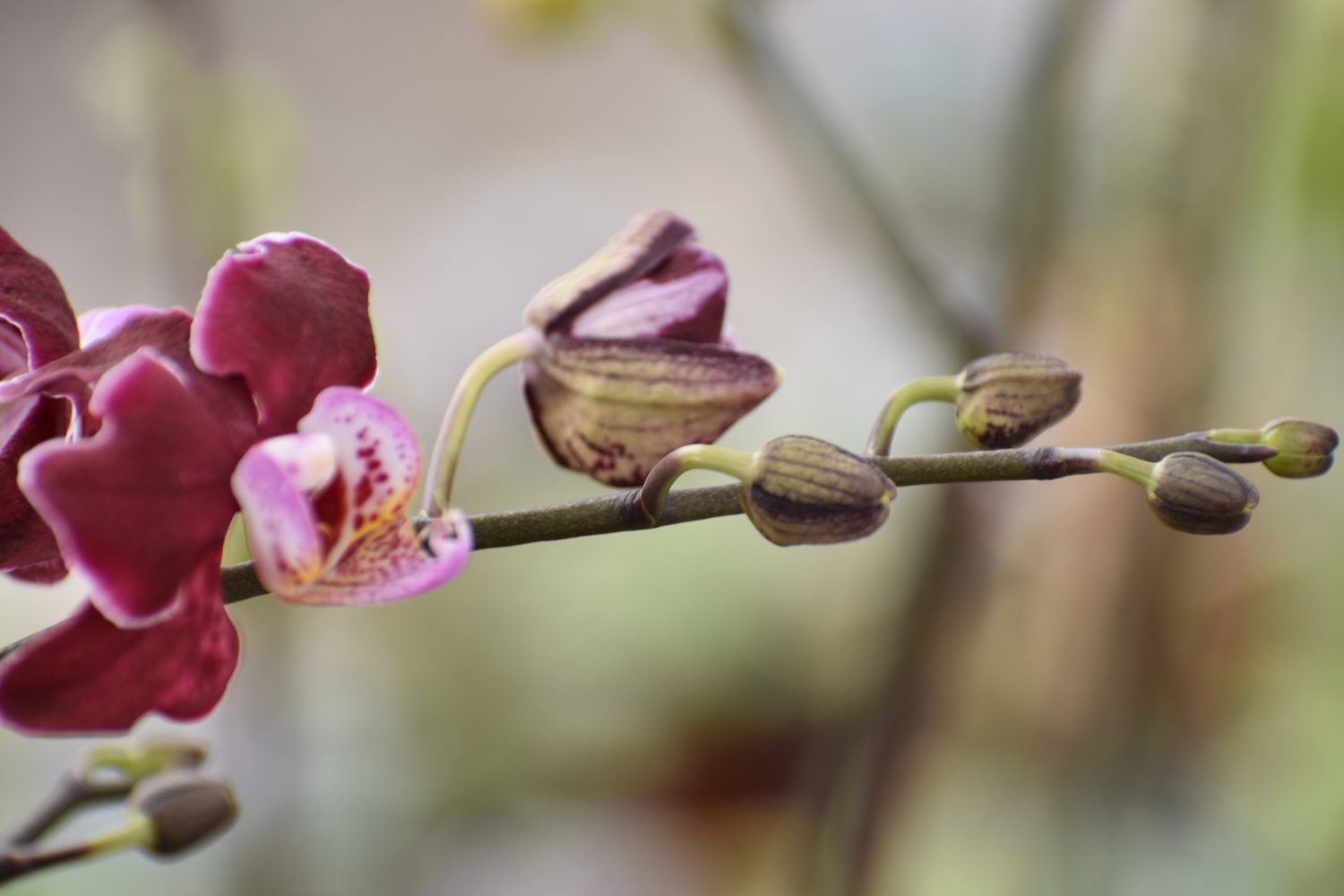
Orchids are exotic and beautiful. They have thousands of species and as many hybrids. Orchids are popular with homeowners. They can be an obsession for the serious collector.
Believe it or not, orchids make up the planet’s largest group of blooming flowers.
They grow in every continent but Antarctica, and come in hundreds of shapes and sizes.
About 99% of orchids today are available for cultivation. On the other hand, 1% of tropical varieties still grow in virtually inaccessible habitats.
Many of these have only been seen a handful of times.
And contrary to popular belief, they’re not difficult to grow.
Many orchids thrive in Florida’s heat and humidity and can do well in the home and around the yard.
Most orchids are epiphytes, and they need special media in which to grow.
Chopped tree fern fiber is a common ingredient in commercially available orchid mixes. Chopped fir tree bark is another common part. Other ingredients include osmunda fiber, charcoal, and volcanic rock.
These materials all help to create the loose, well-drained environment that orchids crave. For the most part, orchids need to be repotted every few years.
Many can be divided into smaller plants at this time. Orchids typically prefer at least partial shade or filtered sunlight and should be protected from cold temperatures.
Orchids, Succulents, Cactus and Tropical Plants are all living organisms that interact with the body, mind, and home in ways that enhance the quality of life.
Temperature and Light:
Bright, indirect light is ideal for most orchid plant care. Southern and eastern exposure is optimal, as well as shady western light. So, never place your Phalaenopsis orchid in full sun.
The foliage is always the best indicator of what your plant needs. Ideally, you want to see firm, light to medium green leaves. Limp, dark green leaves indicate that your orchid is not being exposed to enough light.
On the other hand, too much light exposure will produce an excess of dark reddish pigmentation. You’ll want to remedy this quickly, as it can result in your Phalaenopsis producing fewer and even smaller blooms.
Look for a very slight reddish hue to tell if your plant is receiving the optimal amount of light. You can notice this coloration near the base of the leaves. This lets you know that no more light is necessary!
Watering:
Every orchid plant owner should understand one thing. In its natural setting, most orchids attach their roots to tree bark. These roots are exposed. When exposed to frequent rainfall, the roots thoroughly absorb water and then dry out before they are watered again.
When grown in a pot, it is easy to overwater an orchid plant. Of course, this can result in the roots rotting, causing the plant to wilt or die.
A certain balance must be kept when watering your orchid. Most importantly, allow the roots to dry out a bit between watering. Never let the roots become bone dry. Ideally, you should water the plant thoroughly early in the day.
Because, as with all orchid plant,s you want the leaves to be dry by the evening. Much as you never want to allow standing water on the soil, where the leaves emerge.
Filtered tap water is ideal, and should be cool or room temperature when administered (never cold)… think of rainwater!
Most of all, water your plant with a gentle stream or spray and allow the pot to drain.
Excess water should drain from the bottom of the plant’s pot. This ensures the roots are wet. It also helps to flush excess salt from the soil.
Most noteworthy is that the frequency of watering depends upon the light and temperature conditions. In warm, dry conditions, water every few days.
Especially during the cooler times of the year, wait a little longer between watering. The roots will stay moist for a longer period of time.
Humidity:
Most orchid plants come from tropical environments of 50-90% humidity. Therefore, dry air is not ideal when caring for your orchid.
It is the most challenging factor to control indoors. This is especially true during winter. During this time, heaters are run, and the air is generally very dry.
To increase humidity levels around your orchid, you can mist the leaves. Another method is to put a shallow tray of decorative rocks and water.
Microfoggers and humidifiers are a simple solution if you keep your plant in an enclosed area.
If you keep your orchid plant on a windowsill or larger room, you can try grouping plants.
As a result, they will develop their microclimate. While using humidity grow trays to collect excess water from watering your plants.
In addition, place your orchid pot in a shallow tray or saucer filled with pebbles and water.
Be sure to place the pot on the pebbles. Do not put it in the water, since orchids do not prefer wet roots.
Especially relevant air circulation is also an important factor to consider. Phalaenopsis orchids grow higher up off the ground, on trees, where there is constant air flow. Opposite, many orchids grow on the ground in deep jungles.
Whether you are human or animal, there are so many benefits to living around plants.
Here’s a list from the American Orchid Society that gives a general outline of growing requirements for orchids that do well outside in Florida:
*Cattleya Alliance Hybrid is the showy corsage variety, especially Laelia anceps, and requires half sun. It’s temperature-tolerant.
* Phalaenopsis is great for beginners and does well in full shade.
* Dendrobiums: The Indian and Australian types are best, requiring half sun. They are temperature tolerant.
* Vanda flowers in summer months and takes a lot of suns.
* Epidendrums, especially the brilliant reed-stem types, do fine in South Florida. They need almost full sun but are temperature tolerant.
* Oncidiums: Choose the Mexican species, or higher-elevation types, with light requirements of bright shade to half sun.
* Paphiopedilums are slippered orchids and fare best in shaded gardens.
* Spathoglottis have broad, palm-like leaves and spikes of purple and yellow flowers. Grow them in shade to half sun.
Like what you read? Appreciate the information? We are a non-profit 501c3! Thank us with a contribution by clicking DONATE!
Leave a Reply